

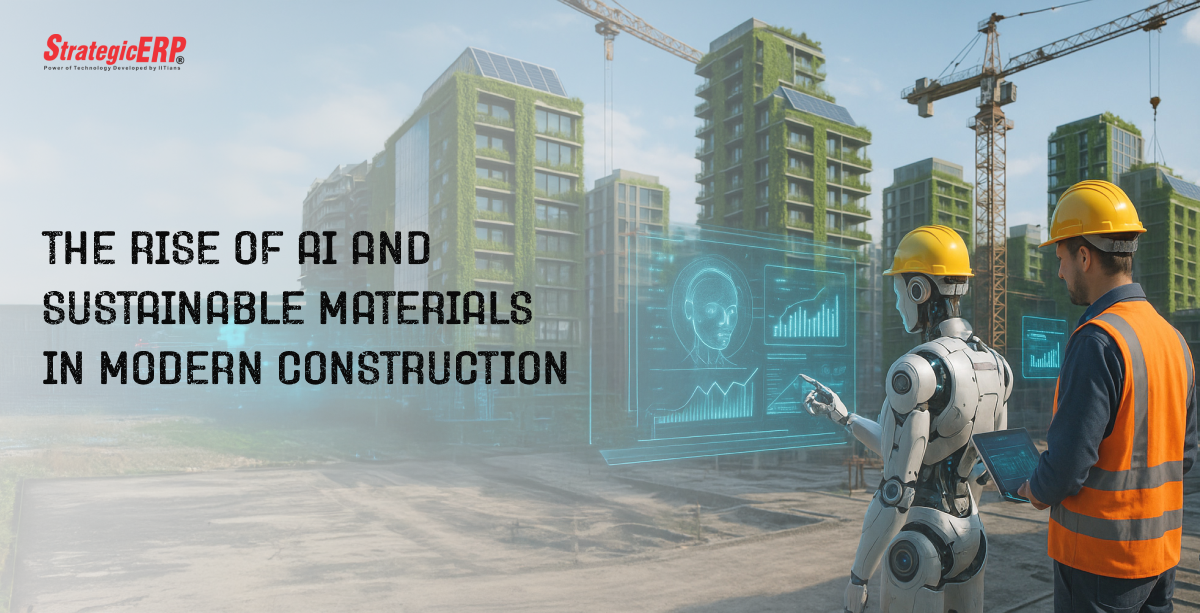
The Rise of AI and Sustainable Materials in Modern Construction
Category : Digital Transformation
Blog posted by : Admin / 04 Dec, 2025
The construction industry is undergoing a transformative shift as sustainable construction materials take center stage. With growing environmental concerns and stricter regulations, builders and developers are increasingly adopting eco-friendly building materials to reduce carbon footprints and enhance efficiency. The inclusion of Artificial Intelligence (AI) has further accelerated this transition by enabling smarter design decisions, predictive analysis, and optimized material usage. This blog explores the rise of these materials, their benefits, challenges, and how advanced tools like AI-based construction ERP software streamline their adoption in projects.
What Are Sustainable Construction Materials?

Image source: Software Connect
Sustainable construction materials are those that minimize environmental impact through their life cycle, from extraction to disposal. These materials are characterized by renewability, energy efficiency, and recyclability, contributing to modern green construction techniques.
Common types used in modern projects include:
-
Bamboo: A fast-growing, renewable resource known for its strength and versatility.
-
Recycled Steel: Utilizes existing steel, reducing the need for new production and conserving resources.
-
Reclaimed Wood: Salvaged from old structures, offering durability and a unique aesthetic.
-
Hempcrete: A bio-composite material combining hemp fibres with lime, providing excellent insulation.
-
Rammed Earth: Compressed soil forms sturdy, thermally efficient walls.
AI technology can assess the environmental performance of these materials and recommend the best combinations for sustainability and cost-effectiveness, helping architects and builders make data-driven decisions.
Importance of Sustainability in Modern Construction

Image source: ResearchGate
The shift towards sustainability is driven by several factors:
-
Environmental Concerns and Climate Change
The construction sector significantly contributes to carbon emissions. Green construction techniques help lower buildings' carbon footprints.
-
Regulatory Standards and Green Certifications
Stricter rules and certifications like LEED promote eco-friendly building materials, ensuring compliance and boosting market appeal.
-
Rising Consumer and Stakeholder Demand
Consumers and investors increasingly prefer sustainable buildings, pushing the industry toward greener practices.
AI-enabled construction ERP systems further strengthen these efforts by predicting material performance, tracking carbon data, and ensuring adherence to sustainability standards through automated reporting.
Key Types of Sustainable Construction Materials

-
Recycled and Reclaimed Materials
Using recycled steel and reclaimed wood cuts waste contributing to low-carbon construction.
-
Bamboo and Engineered Wood
Fast-growing bamboo and efficient engineered wood are durable, making it a top choice for green construction techniques.
-
Hempcrete and Rammed Earth
These materials provide natural insulation, strength, and sustainability.
-
Low-Carbon Concrete Alternatives
AshCrete and bendable concrete lower emissions compared to traditional concrete.
-
Green Insulation Materials
Sheep's wool and recycled denim offer effective, low-impact insulation.
With AI-powered ERP platforms, builders can forecast which materials provide the highest efficiency for each project phase, ensuring cost control and sustainability optimization.
Benefits of Using Sustainable Materials

Image source: 99acres
-
Environmental Impact Reduction
Sustainable materials reduce pollution and conserve resources.
-
Energy Efficiency and Thermal Performance
High-insulation materials cut energy use by 30–50%, lowering costs. Buildings with eco-friendly building help with that.
-
Healthier Indoor Air Quality
Non-toxic materials minimize indoor pollutants and allergens.
-
Long-Term Cost Savings
Durable, sustainable materials reduce maintenance and operating costs over time.
-
Improved Building Lifespan
Durable materials extend the life of structures, reducing the need for frequent renovations or rebuilds.
AI-based ERP software enhances these benefits by monitoring performance data and predicting maintenance schedules, ensuring long-term efficiency and cost savings.
Industry Adoption Across Construction Sectors

Image source: The Business Research Company
-
Residential Housing
Homebuilders are increasingly incorporating sustainable materials to meet consumer demand for eco-friendly living spaces.
-
Commercial Infrastructure
Businesses are investing in green buildings to enhance corporate responsibility and reduce operational costs. Offices and retail spaces integrate eco-friendly building materials for energy efficiency.
-
Industrial and Warehousing Projects
Factories adopt low-carbon construction, to reduce waste and to save energy and meet ESG goals.
-
Smart Cities and Public Infrastructure
Urban projects use sustainable materials for resilient, eco-friendly spaces.
AI-based construction ERP tools help track the usage of sustainable materials across these sectors, providing actionable insights through dashboards and real-time analytics.
Challenges in Using Sustainable Materials

Image source: Coherent Market Insights
-
Higher Initial Costs
Sustainable materials can have higher upfront costs, posing a barrier to adoption despite long-term savings.
-
Material Availability and Supply Chain
Limited availability and supply chain complexities can hinder the widespread use of certain sustainable materials.
-
Knowledge Gap and Workforce Training
A lack of expertise in sustainable construction methods necessitates investment in training and education. Training programs and the best Infrastructure ERP solutions can bridge this gap.
-
Building Code and Compliance Issues
Navigating varying regulations and ensuring compliance can be challenging when implementing new materials and techniques. This requires careful planning with construction ERP software demo tools.
AI-driven ERP systems can mitigate these challenges by predicting cost fluctuations, suggesting alternative materials, and automating compliance checks through intelligent data models.
Future Trends and Innovations
-
Circular Construction Practices
Emphasizing reuse and recycling within the construction process minimizes waste and promotes sustainability.
-
3D Printing with Eco-Materials
Advancements in 3D printing technology allow for the use of sustainable materials, reducing waste and construction time.
-
AI & IoT in Sustainable Material Selection
Smart tools like best Infrastructure ERPs use AI and IoT to optimize material selection and building performance, boosting sustainability.
Conclusion
The integration of sustainable construction materials and eco-friendly building materials is essential for reducing the environmental impact of the construction industry. While challenges exist, the benefits in terms of environmental preservation, cost savings, and improved building performance are substantial.
AI-based construction ERP software plays a pivotal role in facilitating this transition by providing intelligent insights, predictive analytics, and real-time tracking of sustainable resources. By leveraging such technologies, construction firms can seamlessly incorporate sustainable practices into their operations and make smarter, data-driven decisions for a greener future.
Frequently Asked Questions (FAQs)
-
What are the benefits of using sustainable materials in construction?
Sustainable materials reduce the environmental footprint, enhance energy efficiency, and contribute to healthier indoor air quality, promoting long-term sustainability.
-
What are some innovative eco-friendly materials for modern architecture?
Innovative materials like hempcrete, bamboo, and low-carbon concrete offer durability, thermal insulation, and a significantly lower carbon footprint, making them ideal for green building.
-
What are the challenges of sustainable materials in construction projects?
Sustainable materials can be costlier, harder to source consistently, and may face compliance or certification challenges in certain regions.
How can AI-based construction ERP software help in sustainable projects?
Construction ERP software streamlines procurement, tracks sustainable materials, predicts efficiency outcomes with AI, manages costs, and ensures compliance for efficient, transparent green building.