
B2B Growth Engine
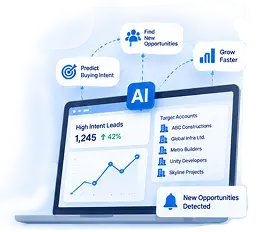
Identifies untapped revenue opportunities and prescribes growth actions using predictive ML models.
- Identify Target Accounts
- Score Leads with AI
- Track Pipeline in Real-time
- Drive Revenue Growth

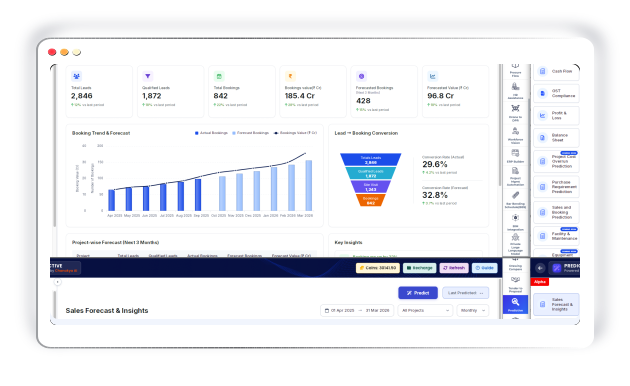
StrategicERP Predictive Analysis helps project teams move beyond backward-looking reports by evaluating available historical project data and current operational indicators. It can help identify patterns associated with schedule slippage, cost variance, labor constraints or supply disruption. Forecast quality depends on the completeness, consistency and timeliness of source data, so insights should be interpreted alongside project expertise and current conditions.
Predict project delays, assess cost risks, and optimize resources with AI-driven insights.
Analyze activity progress and completion trends to flag tasks or milestones that may be at risk.
Compare current project performance with budget assumptions to highlight potential cost pressure.
Surface patterns in project data that may warrant investigation by project controls teams.
Explore potential impacts of weather, supply delays or resource shortages using available scenario inputs.
Review labor, activity and site throughput signals to support resource planning.
A structured path from raw data to proactive control.
Use available schedules, budgets, progress records, procurement information and historical project data.
The model evaluates patterns and configured indicators to identify potential variances or risks.
Project teams validate the signals, assess scenarios and assign corrective actions.
Identify warning signs early enough to investigate possible corrective actions.
Bring schedule, cost and operational signals into a more forward-looking review process.
Assess possible disruptions and compare response options before committing resources.
Help leadership focus attention on the risks most likely to affect project outcomes.
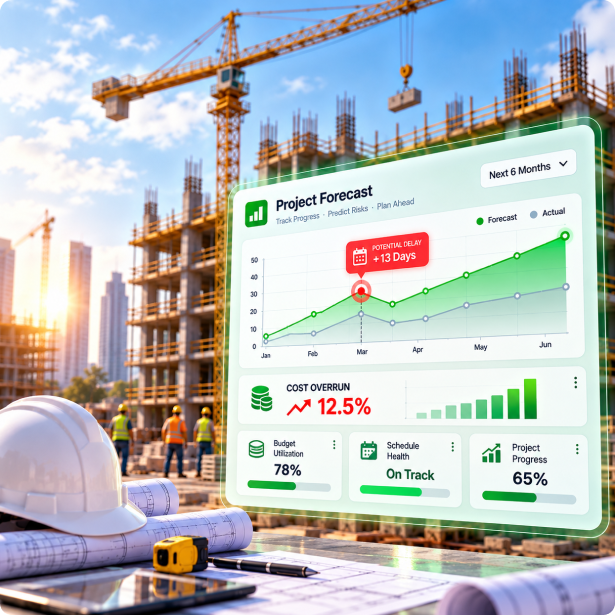
It uses historical and current project data to identify patterns and estimate potential future outcomes, such as schedule or cost risks.
Forecasts are estimates, not guarantees. Reliability depends on source data, project changes, assumptions and the forecasting method.
Relevant data may include schedules, actual progress, budgets, costs, procurement status, resource records and historical project performance.
It can flag emerging cost risks and support earlier investigation, but outcomes depend on the quality of the analysis and the actions taken by project teams.
Identifies untapped revenue opportunities and prescribes growth actions using predictive ML models.
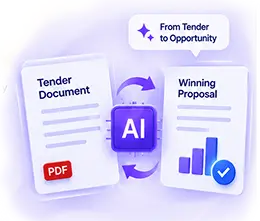
Converts tender documents into winning proposals automatically, with compliance checks and scoring.

StrategicERP from ITAakash Strategic Software (P) Ltd is a software platform for start-to-end process automation and information management systems customized for the Real Estate, Construction & Infrastructure industries. The product owes to its cutting-edge core technology development team, from IIT.
ITAakash Strategic Soft. (P) LTD, 5th floor, D S Business Galleria, Near Huma Adlabs, Beside Toyo House, L.B.S. Road, Kanjur Marg (W), Mumbai, 400078 INDIA.